Human desire has not changed one iota. But the technology and strategies we use to fulfill our desires constantly evolve. That’s why as a young programmer, I chose the management path. Faced with the rapid change of programming languages, frameworks, and libraries, I felt that it would take me a lifetime just to keep up. But since human nature hasn’t changed for a few millennia, I figured I’d devote all my attention to that. People will always need to work in groups, and groups will always need someone to lead them. I’ve been hanging out at the people and technology intersection ever since.
Speaking of the intersection of human desire and technology, I thought it would be fun to explore some of the weirdest historic inventions and learn a thing or two from their failures and successes.
- Rocket Belt

The Rocket Belt, also known as the “Jet Pack,” was an invention of the Bell Aerosystems Company in 1961. The device was a small rocket engine strapped to the back of a person and could lift them into the air and allow them to fly for a short period. The Rocket Belt never caught on. Besides having a short flight time, it was dangerous. I mean, do you want to strap a missile on your back?
Today, we see similar attempts to develop personal flying devices, such as jet-powered wingsuits and electric vertical takeoff and landing (eVTOL) vehicles. These devices have yet to become mainstream, but the desire for personal flight (beyond recreational gliding), feeling the wind in your face type flight, will always remain since the time that Icarus flew a little too close to the sun.
Prediction: this mode of transportation will never become the dominant form of transport. It will be more akin to a motorcycle — appeal to those who like the adrenalin rush and are willing to put up with a higher risk of bodily injury.
2. Robot Cat

In 1963, Waco released the “Robot Cat,” a small robot that mimicked the appearance and behavior of a cat. While the Robot Cat was originally designed to catch mice, it quickly gained popularity as a novelty item and pet substitute.
The Robot Cat represents a long-standing desire among humans for a simpler and more convenient alternative to real pets. As humans have become increasingly urbanized and technology-dependent, the idea of a low-maintenance robotic pet has become increasingly appealing. There are many novelty robots
Prediction: All these robots will continue to miss the mark. What makes dogs, cats, and birds so lovable is that we invest so much of our time in their care. We will never do that for a robot. However, like Pygmalion, we will always attempt to build that perfect Galatea — unfortunately, I doubt the gods will ever breathe true life into our inventions.
3. TV Glasses
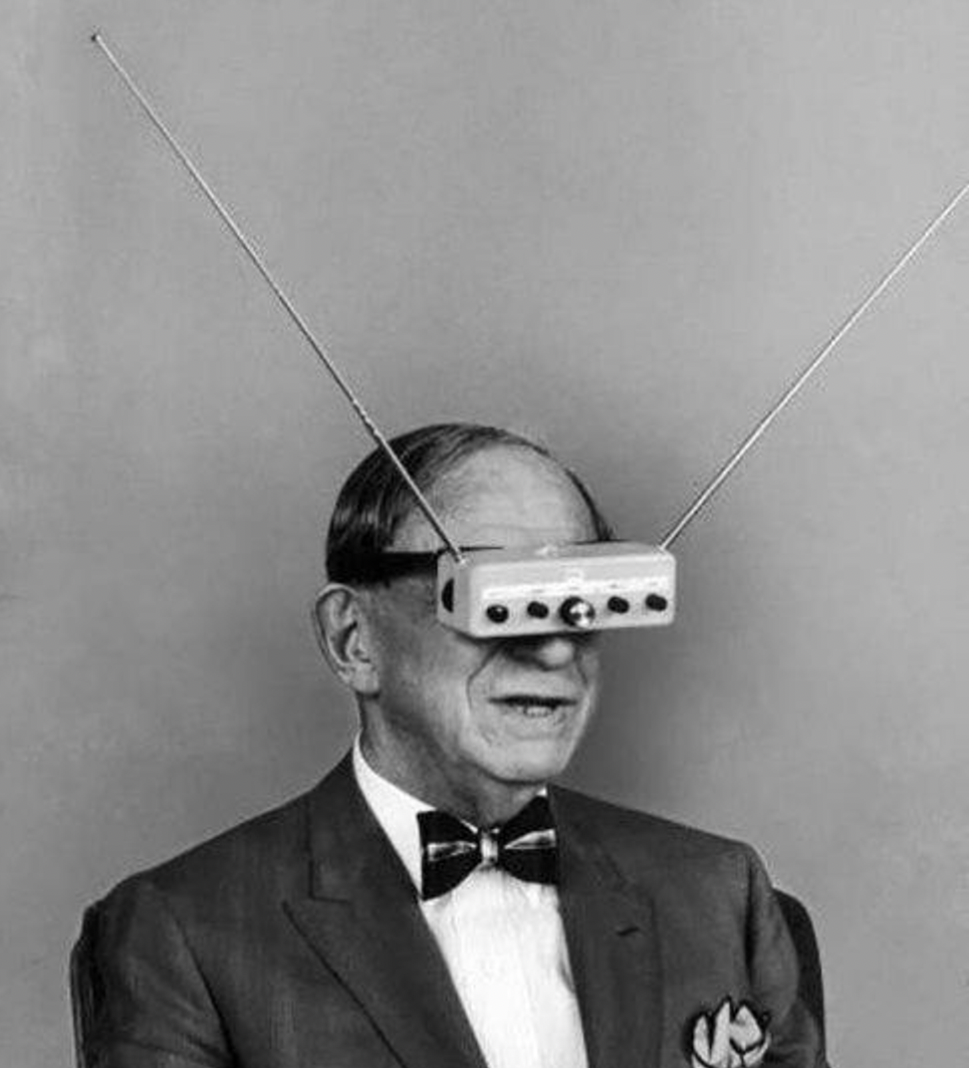
In 1963, a company called Hughes Aircraft introduced the “TV Glasses” — a pair of goggles that allowed users to watch television in 3D. Although the technology was rudimentary by today’s standards, TV Glasses were an important precursor to modern 3D glasses.
TV Glasses may have been the first step in our quest to immerse ourselves in a reality of our own creation.
Today, we see this fascination reflected in the popularity of 3D movies and virtual reality technology. New TVs come with 3D viewing capabilities, and virtual reality headsets like the Oculus Rift offer a more immersive experience than ever before. There are also smart glasses, that create augmented reality overlays.
Prediction: the desire for us to inhabit an alternative reality space may be one of the strongest of human desires. I believe its root lies in the way we immerse ourselves in stories and myths. Don’t we love to read stories where we imagine ourselves as the protagonist? Where we are stronger, smarter, prettier, and just better?
A breakthrough tech may not have been invented yet. But it will be and very soon. The desire to live in an imagined world is too strong. And the technology to fulfill that desire is already here.
4. Unicycle
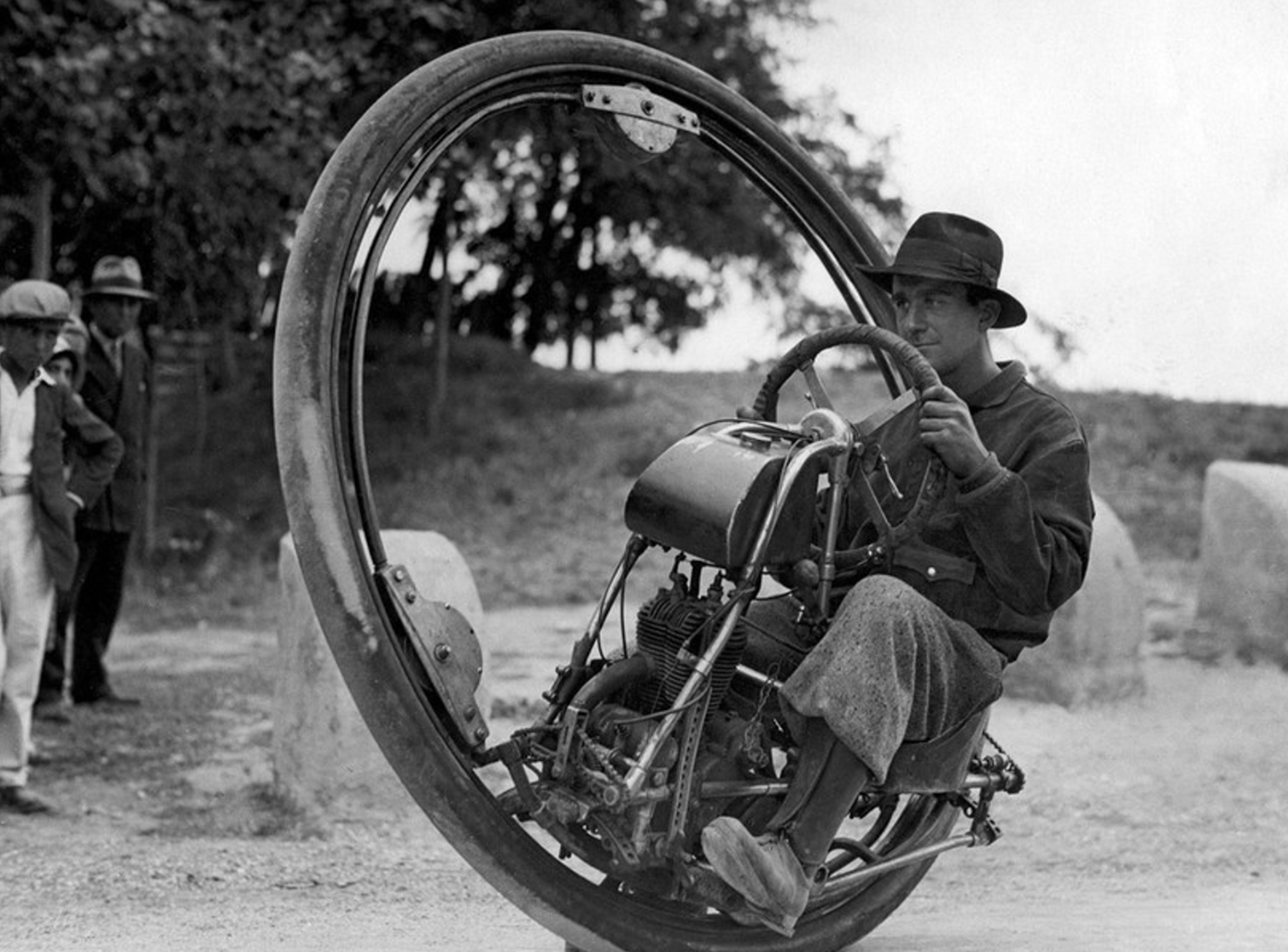
Imagine riding a unicycle at a breakneck speed of 150 km/h — that’s exactly what Italian inventor Enrico Forlanini envisioned in 1931 when he created the first-ever high-speed unicycle. This daring invention was a testament to the spirit of innovation and experimentation that characterized the early 20th century.
Although the high-speed unicycle was never widely adopted, its legacy can still be seen in modern transportation technologies, particularly in the development of electric unicycles and other novelty forms of personal transportation.
Prediction: as we master a particular technology, we yearn for self-expression. Knights had unique decorative plumage, helmets, and coats of arms. The unicycle is an expression of radical personalization. We’ll always have similar inventions, but they will never go mainstream.
5. Answering machine robot

In 1964, a company called Telecar invented a robot that could answer the phone and record messages. This may not seem like a big deal now, with our smartphones and voice assistants, but back then it was a game-changer. And it led to the invention of the actual answering machine.
What’s interesting here is that the first version of this technology actually looked like a robot. That’s called skeuomorphism — when the product we build looks like the things we are trying to replace. It’s the human way of linking the future to the past. But as technology evolves, it takes on an optimized form that may look nothing like the original. And that’s what needed to happen to the answering machine before it filled every American home at the end of the 20th century. It needed to become cheap to manufacture, small so it could fit next to a phone, and easy to install so anyone could do it.
6. Isolator
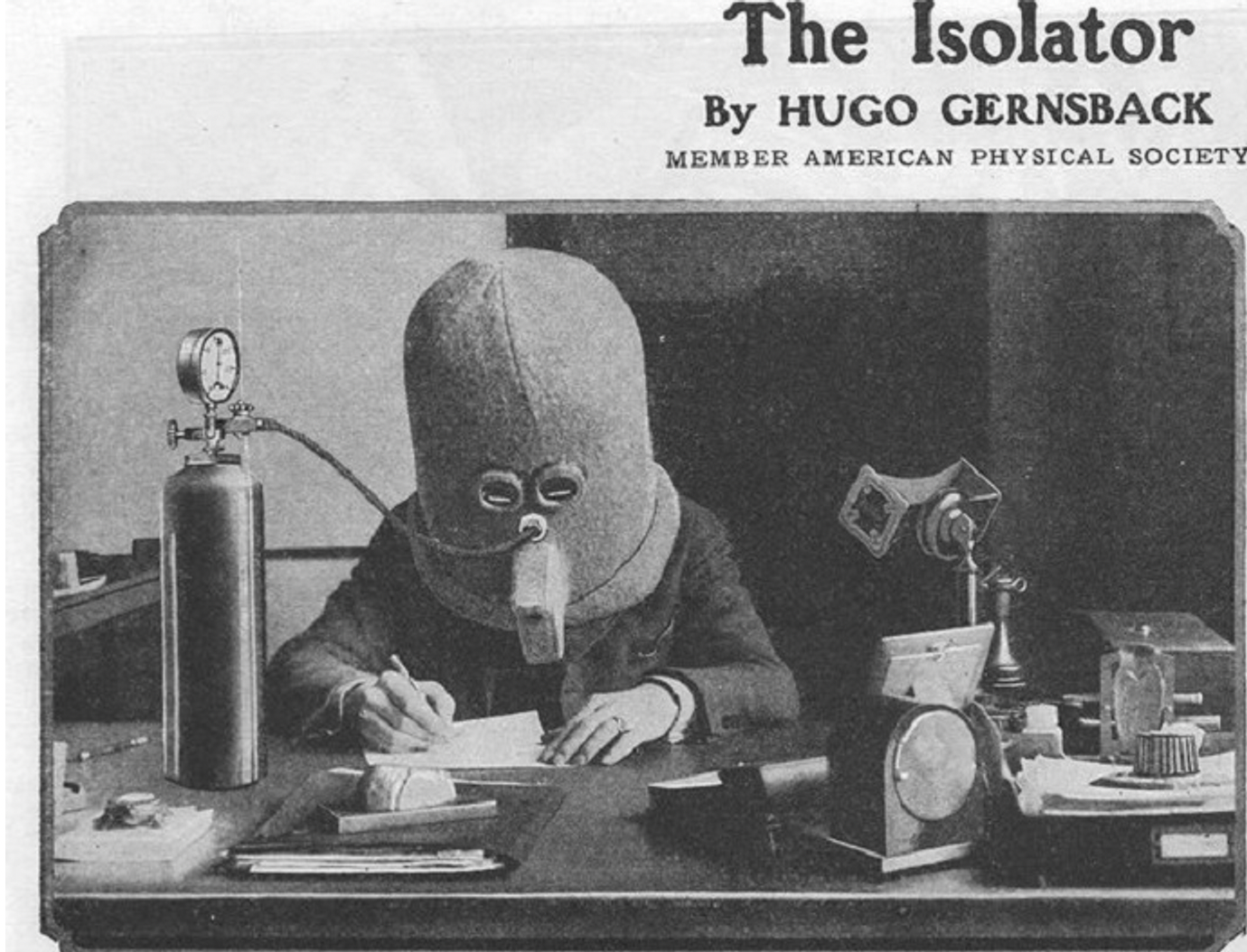
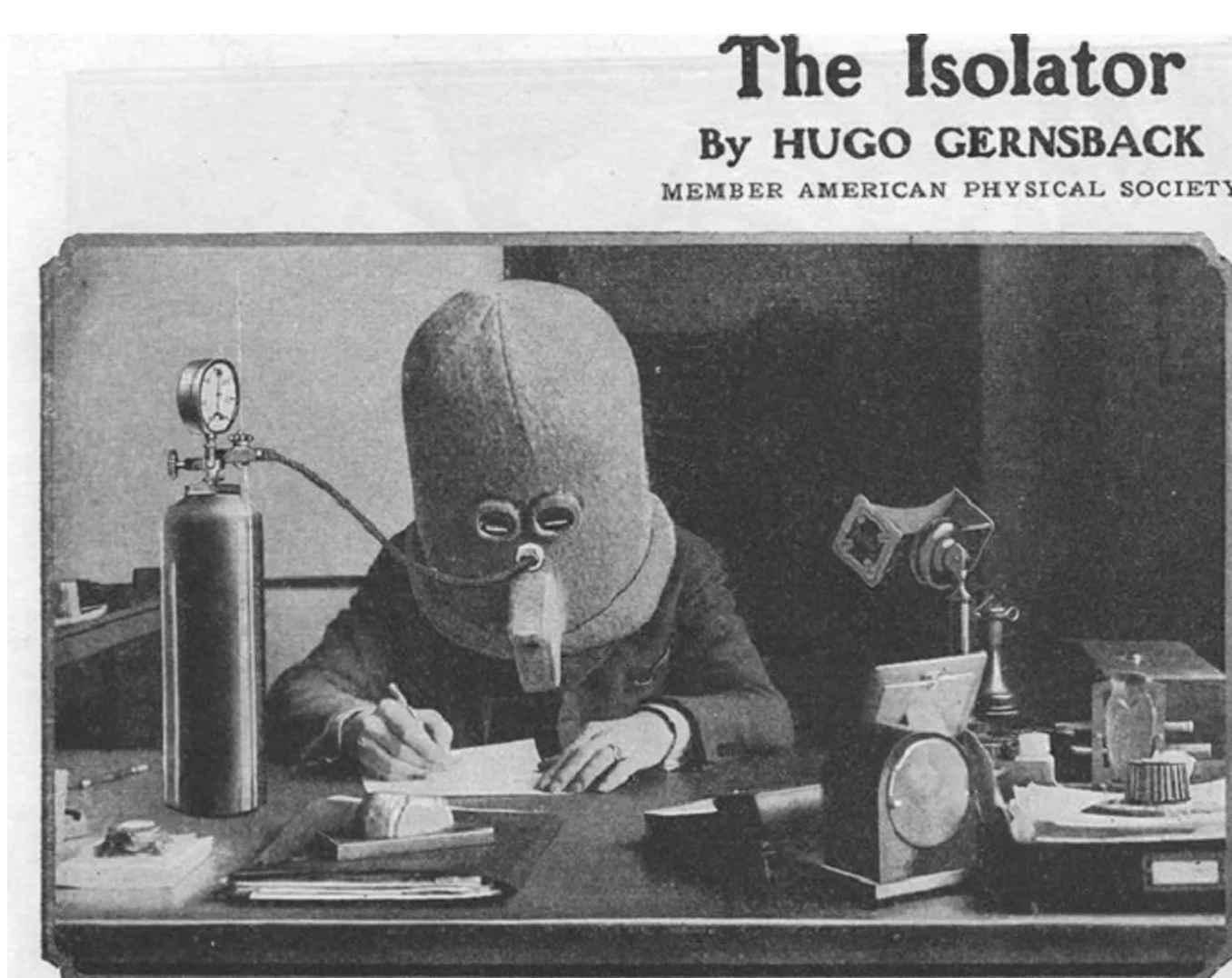
The Isolator, invented in the 1930s, was a device that helped writers block out external noise and distractions so they could focus on their work. It was essentially a small, enclosed booth where the writer could sit and work in peace. Although it may seem like a primitive invention by today’s standards, the concept of creating a space for productivity and concentration is still relevant today. Modern co-working spaces and shared offices often offer private “phone booths” or soundproof rooms for people who need to make calls or concentrate on their work without being disturbed.
I prefer to turn off the internet connection to my computer and enable full-screen mode — so that the writing is all I see.
Prediction: There will always be a new mousetrap that purports to free us from distractions. Some will be more successful than others. But the truth will always remain the same: these devices and hacks only be as successful as our will to use them. Our willpower will remain the real issue. Now, if we ever solve that and give ourselves the iron will, it’s a safe bet that at that point we would have stopped being human.
7. Amphibian car with a motorcycle engine
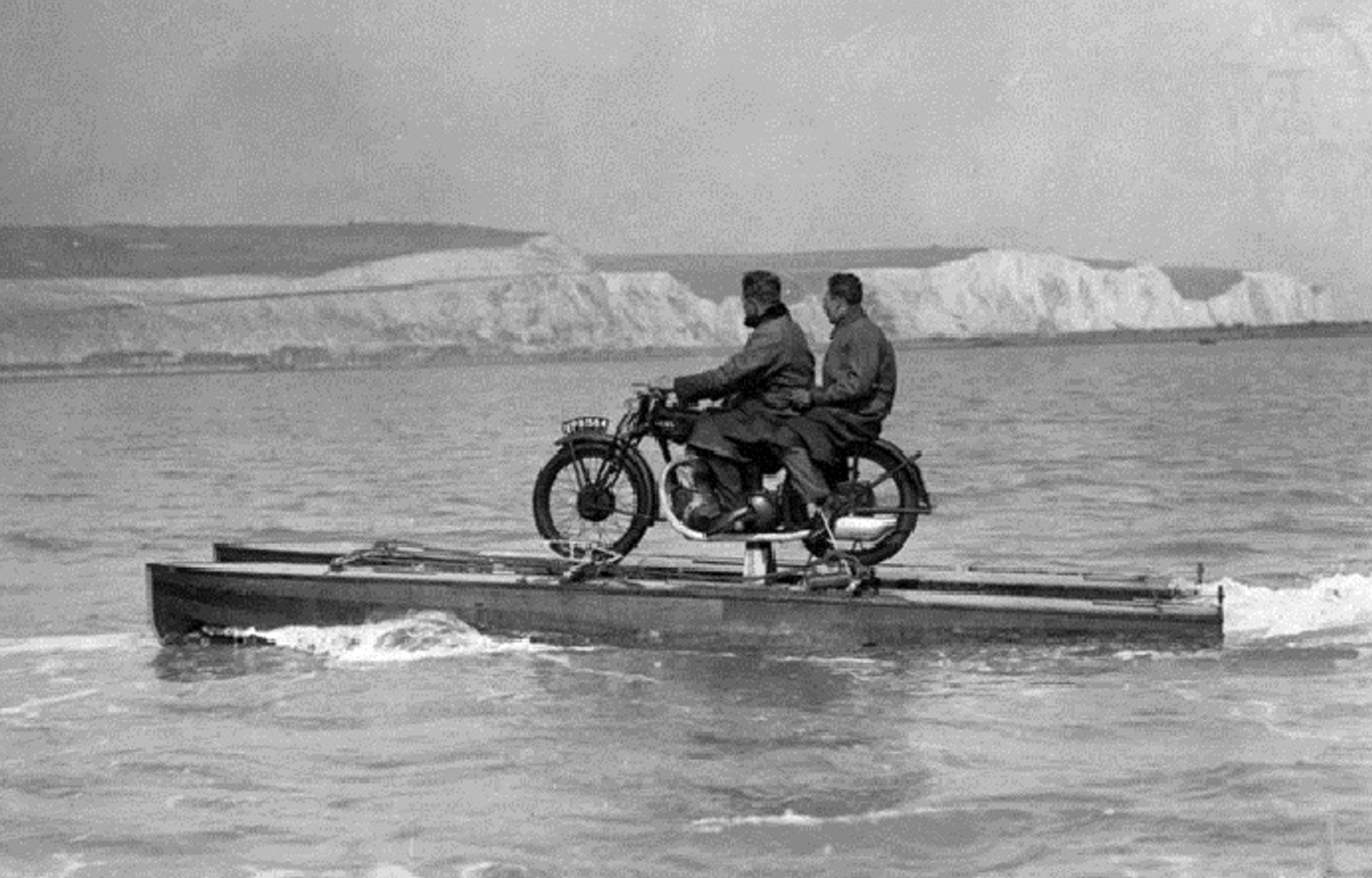
In the mid-20th century, a fascination with amphibious vehicles emerged, and people began experimenting with ways to make cars and motorcycles work on both land and water. One of the most unusual examples of this trend was the homemade amphibian car with a motorcycle engine.
Today, we continue to see a fascination with vehicles that can operate in multiple environments. From electric bikes to off-road vehicles that can tackle both dirt and water, modern inventors are still pushing the boundaries of what is possible in transportation.
Prediction: This is the Swiss army knife approach to invention. I’d argue, the most successful Swiss army knife to date has been the cell phone. It cannibalized plain cell phones, landline phones (don’t have one), cameras (mine is gathering dust in the closet), and TVs (don’t have one). The reason is there was already a universal need for all these objects. Combining them in an easy-to-carry device was genius.
The number of people who have boats in the US is not that high. Nor is the number of people who routinely drive their vehicles off-road. Hence this invention didn’t take off and any iteration of it wouldn’t take off either. But take the RV — a much more successful Swiss Army knife. People travel on roads and hate staying at hotels. Or they travel to places without hotels and didn’t want to use a tent. There you go — you got RVs.
Swiss Army knives will prove popular whenever they combine functions that are separately in high demand.
Alright, I am not sure if I learned much from this besides the fact that human desire will always stay the same and that we humans, collectively are a creative force to be reckoned with.
Speaking of creative things, I’ve been working on a book at the intersection of Science Fiction and the Bible. I’ve always been fascinated with how people would behave if they possessed all the knowledge in the universe. My feeling is, ahem… well… human nature would stay the same, Cain would still kill Abel, and we would still want to compete with God and show Him that we are better. How? We’d use our knowledge to recreate the Universe and initiate a new Big Bang.
If you are interested in reading, Before Recreation, when it comes out, and hearing more about topics like this article, follow me.